How to Import Custom Parts from China
March 11, 2026
Shearing and Blanking in Sheet Metal Fabrication
April 22, 2026Sheet Metal vs Stamping Which to Choose
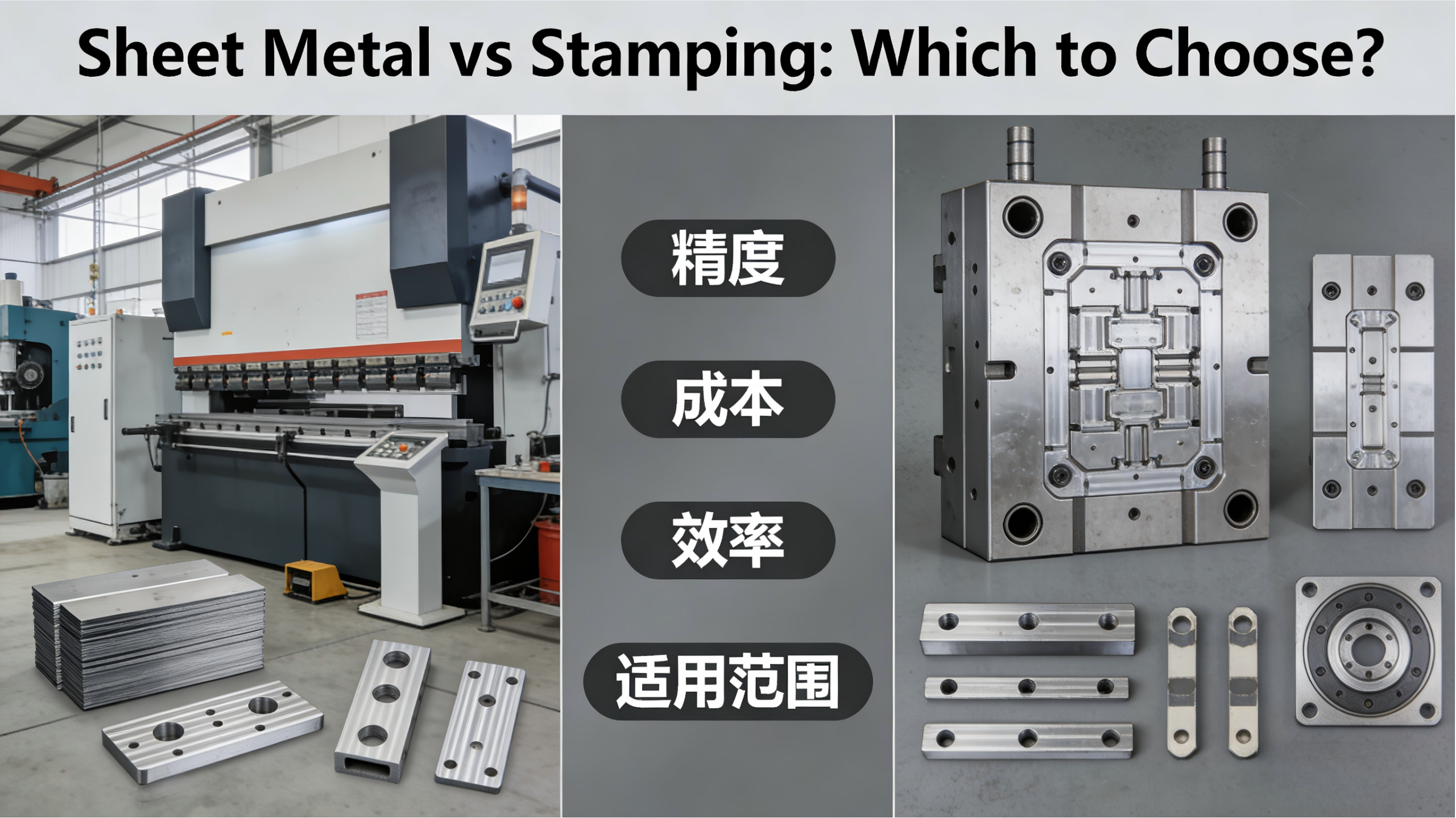 When sourcing custom metal parts, choosing between sheet metal fabrication and metal stamping is a critical decision that impacts cost, lead time, and part quality. Many buyers confuse the two processes, but they serve distinct project needs, order volumes, and design requirements. Understanding the key differences between sheet metal and stamping helps you select the right process to stay within budget and meet your project goals. Below is a full comparison of sheet metal fabrication and metal stamping to guide your choice.
What Is Sheet Metal Fabrication?
Sheet metal fabrication is a versatile, custom manufacturing process that involves cutting, bending, welding, punching, and assembling metal sheets to create unique parts. It is a low-volume, high-flexibility process with minimal upfront tooling costs. Sheet metal fabrication offers complete design freedom, allowing for complex shapes, custom cutouts, and welded assemblies that cannot be produced with stamping. Key Traits: Low upfront cost, high design flexibility, fast small-batch lead times, ideal for custom and complex parts. Best For: Prototypes, small to medium order volumes (under 5,000 pieces), complex custom designs, quick turnaround projects.
What Is Metal Stamping?
Metal stamping is a high-speed, automated mass production process that uses custom precision die molds to press, cut, and form metal sheets into identical parts. It requires higher upfront tooling costs to create custom dies, but per-unit costs drop dramatically for large-volume orders. Stamping produces consistent, uniform parts at high speeds, making it perfect for mass-produced components. Key Traits: Higher upfront tooling cost, low per-unit cost for large runs, fast mass production, consistent part quality. Best For: High order volumes (10,000+ pieces), mass production, identical repeat parts, long-term bulk orders.
Sheet Metal vs Stamping: Full Comparison
Order Volume: Sheet metal is ideal for low to medium volumes; stamping is designed for high-volume mass production. Upfront Cost: Sheet metal has minimal tooling costs; stamping requires custom die investment.Design Flexibility: Sheet metal offers unlimited design freedom; stamping has moderate flexibility limited by die design. Per-Unit Cost: Sheet metal has higher per-unit costs for large runs; stamping has extremely low per-unit costs at scale. Lead Time: Sheet metal has fast lead times for small batches; stamping has longer initial lead times due to tooling but faster large-batch production.
How to Make Your Choice
Choose Sheet Metal Fabrication if you need prototypes, custom complex parts, small-batch orders, or fast turnaround with low upfront costs. Choose Metal Stamping if you need high-volume mass production, identical repeat parts, low long-term per-unit costs, and consistent bulk orders. If you’re unsure, consult with a one-stop metal manufacturer that offers both processes—they will provide unbiased recommendations based on your unique project details.
Final Takeaway
Neither process is inherently better—they serve different purposes. Sheet metal excels at custom, low-volume work, while stamping dominates mass production. Align your choice with your order volume, design complexity, budget, and timeline to get the best value and quality for your custom metal parts.
CTA: Share your project details to get a personalized process recommendation and free quote.