

Sheet Metal Design Tips to Lower Cost
March 10, 2026
Plastic Materials Guide: ABS, PC, PP, PA
March 11, 2026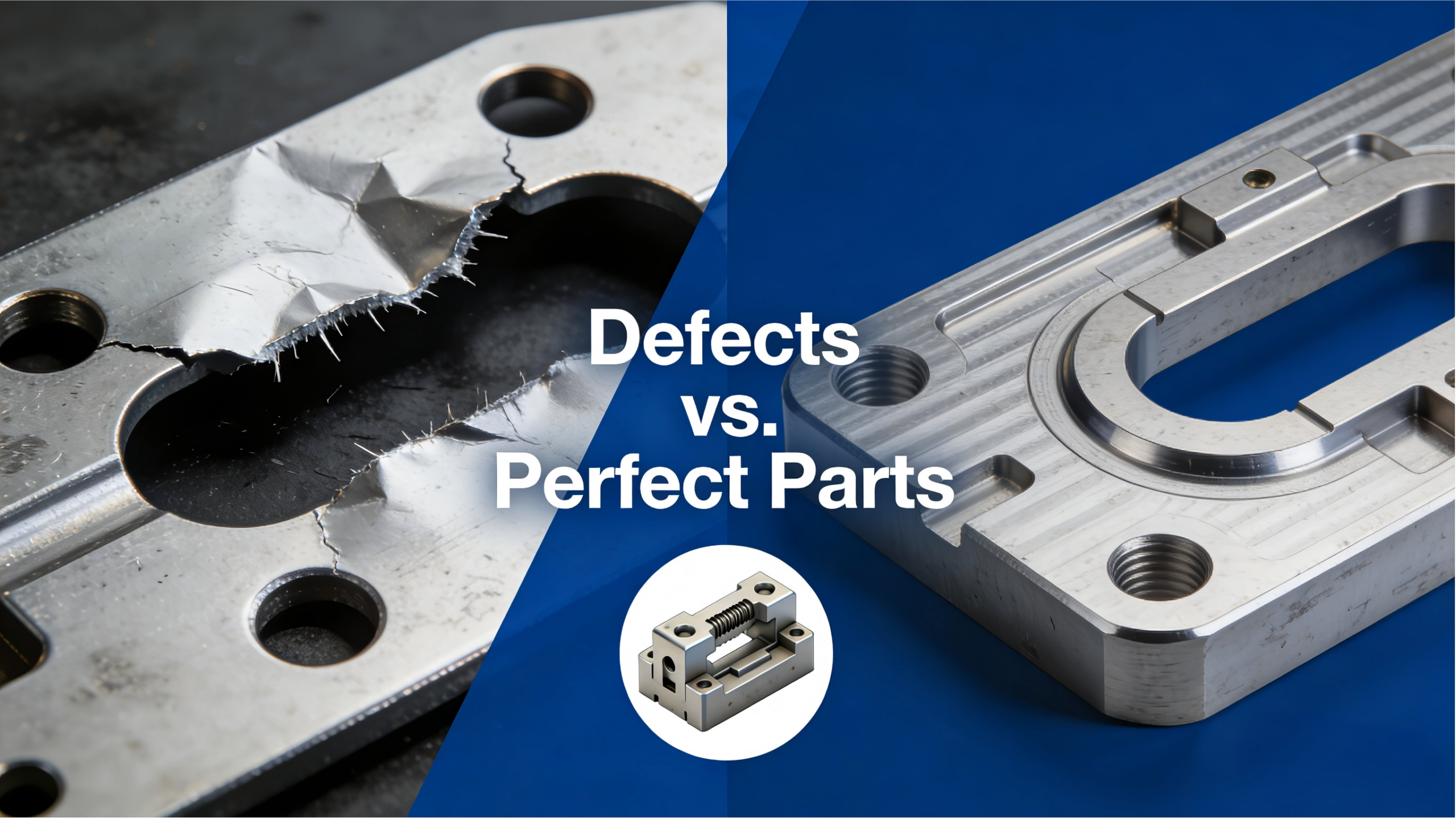
Metal stamping is a highly efficient, cost-effective process for mass-producing metal parts used in automotive, electronics, hardware, and consumer goods. However, even minor errors in design, tooling, material, or machine settings can lead to costly defects that result in wasted material, rejected parts, and missed deadlines. Understanding common stamping defects and their solutions helps manufacturers and buyers avoid these issues and ensure consistent, high-quality results. Below are the most prevalent metal stamping defects and proven fixes to resolve them.
1. Tearing and Cracking
Tearing or cracking is one of the most common stamping defects, occurring when the metal sheet breaks during the forming process. Root Causes: Overly sharp internal corners, insufficient material ductility, incorrect blank holder pressure, or incompatible material grades.Solutions: Replace sharp corners with rounded radii to reduce stress concentration, use ductile materials like 1008 steel or 5052 aluminum, adjust blank holder pressure for even material flow, and conduct pre-production material testing to verify flexibility. Avoid using brittle metals for complex stamped designs to prevent tearing entirely.
2. Wrinkling
Wrinkling appears as uneven folds or creases on thin metal sheets, ruining part appearance and structural integrity. Root Causes: Uneven material flow, excessive blank holder pressure, poorly designed die molds, or insufficient material tension. Solutions: Optimize die mold design for smooth material movement, add draw beads to control material flow, reduce blank holder pressure slightly, and use properly sized material blanks. Regular die maintenance and calibration also prevent wrinkling by ensuring consistent pressure across the metal sheet.
3. Springback
Springback happens when stamped parts bend back to their original shape after the stamping press is released, causing dimensional inaccuracies. Root Causes: High material rigidity (common in stainless steel and aluminum), insufficient press pressure, or improper die design. Solutions: Over-bend parts during stamping to compensate for springback, use high-force precision presses, and design dies with built-in springback compensation. For rigid metals, work with a manufacturer that uses advanced press calibration to minimize shape distortion.
4. Burrs and Rough Edges
Burrs are sharp, excess metal edges left after cutting or punching, creating safety hazards and requiring extra deburring work. Root Causes: Dull cutting dies, improper die clearance, or misaligned press equipment. Solutions: Regularly sharpen or replace stamping dies, maintain proper die clearance based on material thickness, and calibrate press equipment for precise alignment. Many manufacturers add automated deburring to their process to eliminate burrs before parts are finished.
5. Misalignment and Dimensional Errors
Misaligned features or inconsistent part dimensions make stamped parts unusable for assembly. Root Causes: Loose tooling, uncalibrated presses, poor die setup, or human error during production. Solutions: Secure tooling tightly to the press, calibrate equipment regularly, use precision jigs and fixtures, and conduct in-process dimensional checks. A strict quality control system catches these errors early, reducing rejection rates and rework costs.
Preventing Stamping Defects Long-Term
The best way to avoid metal stamping defects is to partner with a precision stamping manufacturer that conducts thorough DFM analysis, uses well-maintained tooling, and implements strict quality control at every stage. Investing in high-quality tooling and regular equipment maintenance also eliminates most common defects, ensuring consistent, high-quality stamped parts for every order.
CTA: Request a free sample of our precision-stamped metal parts and learn about our quality control process.


